When a social media account disappears or is disabled, creators can instantly lose access to followers, messages, and content. That’s why authors should never rely only on social media platforms. A personal website, email newsletter, and private community provide stable ways to stay connected with readers even if a platform suddenly shuts down access.

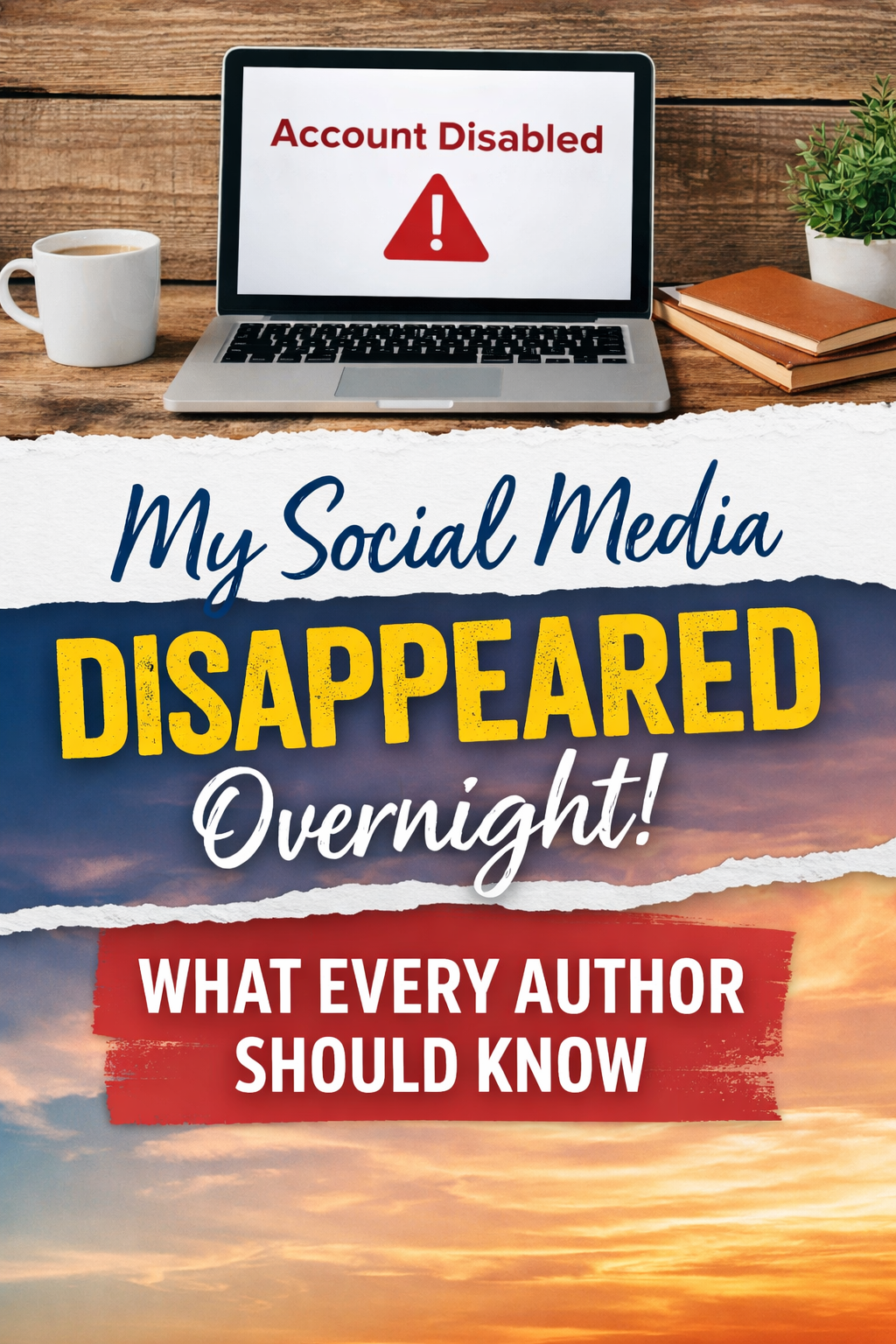
On Tuesday, March 10, 2026, I went to log in to my Facebook account—and suddenly I couldn’t.
Instead of my usual page, I saw a message saying my account had been flagged and that I could submit an appeal.
Just like that, my access was gone. I’m writing this post on the evening of March 13th, and it’s still gone.
Anyone who follows my pages knows I’m not someone who posts controversial content.
I’m a multi-genre author who writes romantic suspense, closed-door romance, romantasy, poetry, and travel articles. My daily posts tend to focus on encouragement, books, and adventure. So the idea that my account would be flagged didn’t make much sense.
But whether it makes sense or not, it happened.
Because my Facebook, Instagram, and Threads accounts are all connected through Meta Platforms, they are all blocked. I can’t see my pages. I can’t see messages. I can’t even see the comments readers may have left.
From one moment to the next, my social media presence disappeared.
This Isn’t the First Time
Unfortunately, this isn’t new for me.
Two years ago, my Facebook account went down for four long months. I wasn’t able to access it again until a relative who works in IT helped me navigate the process of getting it restored.
That experience taught me a lesson that many writers, creators, and small business owners eventually learn:
We don’t own our social media platforms.
No matter how many followers we build or how many years we invest, those accounts ultimately belong to the platform. And they can disappear at any moment.
The Hard Truth About Social Media
Social media can be a wonderful way to connect with readers, friends, and fellow authors. I’ve enjoyed many meaningful conversations and built relationships through those platforms.
But there’s an important reality behind it:
You don’t control social media.
Platforms change algorithms. Accounts get flagged. Systems make mistakes. Policies shift.
And sometimes, access simply vanishes.
When that happens, creators suddenly lose their main connection with their audience.
That’s why it’s so important to build spaces online that you actually control.
Why Your Website Is Your Online Home Base
Where is your Online Home Base?
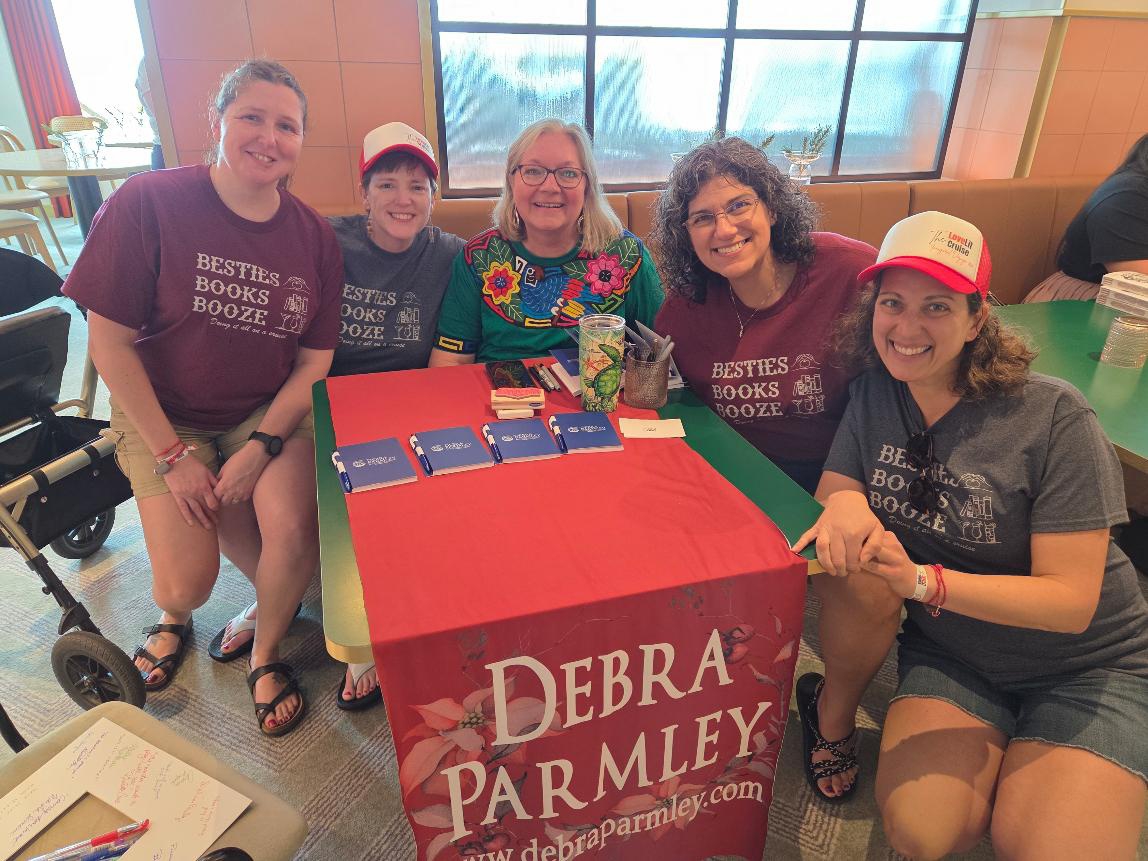
For me, that place is this website. I’ve begun thinking of it as command central for my author life online.
My website is where I can share:
- All my books and upcoming releases
- Travel stories and articles
- Writing updates
- New book covers
- Event announcements
- Links to places readers can connect with me
- Articles sharing what’s going on in my writing life, like this one
Unlike social media, a website is something you manage and maintain yourself. It becomes a stable place readers can always return to, even when other platforms change. It is dependable and lets readers know they can find you there. I believe trust is a very important thing. So is reliability.
My Newsletter: The Best Way to Stay Connected
Another space I fully control is my newsletter.
Earlier this year, I began sending it out every Thursday as a weekly update. I wanted to be more connected with my readers and to communicate more often than once a month.
Email newsletters are one of the most reliable ways for authors to stay connected with readers because:
- Emails arrive directly in your inbox
- No algorithm decides whether you see them
- Readers can reply and start real conversations
If you ever respond to one of my newsletters, it comes directly to me. That makes it one of the most personal ways we can stay in touch. Connection matters to me, and I love hearing from my readers.
Expanding My Presence Beyond Social Media
Even though social media has its risks, there are still many ways to stay connected online.
In addition to my website and newsletter, I also have a channel on YouTube that I plan to use more regularly. Starting this month. I’m sharing “March of the Writers” videos, with one prompt for each day in March posted throughout March. It’s an annual event, created by my Puerto Rican author friend JD Estrada, and this is my third year to participate. It’s also timely, as the Facebook/Instagram/Threads door slammed shut, here was this open door opportunity already there waiting for me.
Video allows me to talk about writing, books, and creativity in a more personal way, coming to you from my motorhome, sharing a glimpse into my life.
I also run a private community on Discord.
Interestingly, I created that Discord group during the four months I was locked out of Facebook the last time this happened. A brilliant suggestion from my son was what got it rolling, as we were already connected on Discord, where we could chat instead of texting. So I was used to Discord, and he helped me set the group up. It became a small, welcoming space where readers and friends can gather and talk. I have Discord on my phone. I do not have Facebook on my phone, and never will.
A Lesson Worth Remembering
If there’s one lesson this situation keeps reminding me of, it’s this:
Never rely on one platform to stay connected.
Social media is helpful, but it shouldn’t be the only bridge between creators and their audience.
Websites, newsletters, and private communities provide something social media can’t always guarantee—stability and direct communication.
And if another account disappears someday, I know we’ll still have ways to find each other.
How to Stay Connected With Me
If you’d like to keep up with my books, travel writing, and adventures, the best places to find me are:
- Right here on my website
- My weekly Thursday newsletter
- My YouTube channel
- My private Discord community
Those spaces ensure we can stay connected no matter what happens on social media. And in today’s online world, that kind of connection matters more than ever.
Frequently Asked Questions
What should you do if your social media account disappears?
If your social media account disappears, the most important step is maintaining other ways to connect with your audience. A personal website, email newsletter, and private communities help ensure you stay connected even if platforms change or accounts are restricted.
Why is a website important for authors?
A website serves as an author’s online home base. Unlike social media platforms, authors control their website content, book listings, events, and reader communication.
Is a newsletter better than social media for authors?
In many ways, yes. A newsletter reaches readers directly in their inbox without algorithms deciding who sees your content. It also allows readers to reply and build a more personal connection with the author.
What are alternatives to social media for writers?
Writers can build audiences through websites, newsletters, reader communities, podcasts, video channels, and private groups. Platforms like Discord or channels on YouTube allow creators to communicate more directly with their audience.
Why Was My Facebook Account Disabled?
Many people search online asking why their Facebook account was suddenly disabled or restricted.
In many cases, users receive a message saying their account has been flagged for review or that they violated community guidelines—even if they don’t believe they posted anything that broke the rules.
There are several reasons a social media account might be disabled:
- Automated moderation systems flag content incorrectly
- Suspicious login activity triggers a security lock
- A post or comment is mistakenly reported
- Platform policy changes affect older content
- Technical errors or system glitches
Because platforms like Meta Platforms manage billions of accounts, much of the moderation process is automated. That means mistakes sometimes happen.
When an account is disabled, users are usually given the option to submit an appeal. However, responses can take days—or sometimes much longer.
In my case, the last time it took four months.
What To Do If Your Facebook Account Is Disabled
If your Facebook account is suddenly unavailable, there are a few steps you can try.
1. Submit an Appeal
Follow the instructions provided in the message from Facebook and submit an appeal explaining that you believe the account was flagged in error.
2. Verify Your Identity
Sometimes Facebook will request identification to confirm that you are the account owner.
3. Check Your Email
Platform notifications about account status are often sent by email rather than appearing inside the app.
4. Be Patient
Unfortunately, response times vary widely and may take days or weeks.
5. Maintain Other Ways to Reach Your Audience
This is one of the most important lessons creators learn when an account disappears. Social media platforms are helpful tools—but they should never be the only connection with your audience.
I have done all five of these, the last time it happened, and again this time. There is no automatic fix and no helpline you can call. Having this happen the second time doesn’t make it any easier. I just know what to expect this time and what to do. It’s that here we go again feeling. And there’s no guarantee it won’t happen again after this second time.
So now I wait.
To sign up for my newsletter, which goes out every Thursday go here;
https://dashboard.mailerlite.com/forms/799582/111721491841680992/share
And you can visit my YouTube channel for recent videos from me: https://www.youtube.com/@DebraParmleyBeautifulDay
If you are interested in joining my private Discord group, email me at debra@debraparmley.com so I can send you an invitation link. Links expire in 7 days.